Accurate and resilient GNSS timing modules for critical infrastructure



The future of GNSS timing with mosaic-G5 T
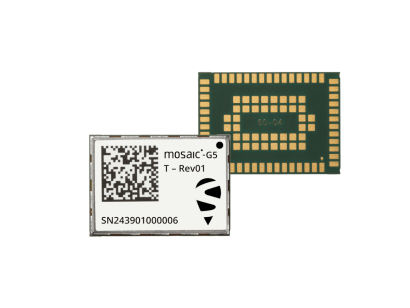
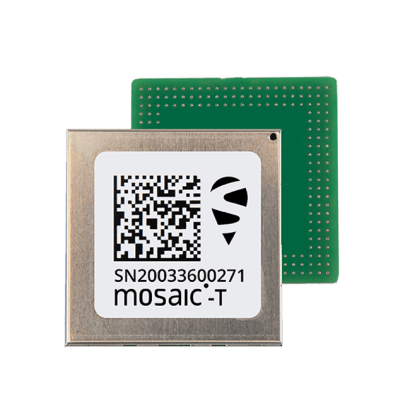
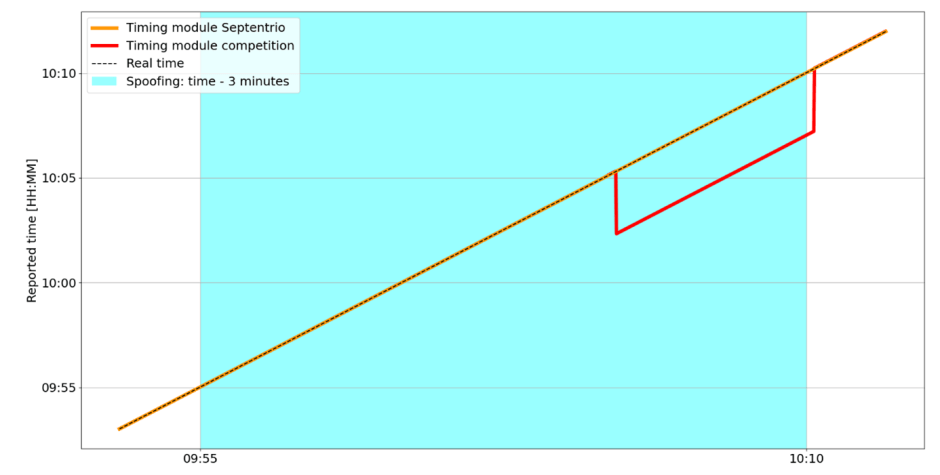
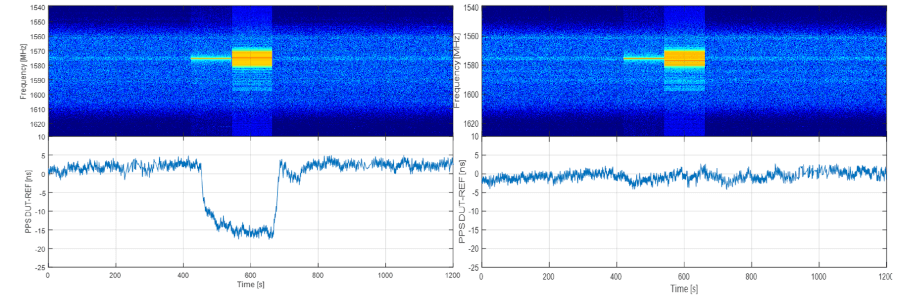
Building on decades of experience and the proven success of the mosaic-T module, Septentrio has introduced the ultra-compact GNSS timing module mosaic-G5 T. Measuring just 23 × 16 mm and weighing only 2.2 grams, this receiver expands possibilities for system designers operating under strict size, weight, and power (SWaP) constraints. Its nanosecond precision, fortified by AIM+ Premium anti-jamming and anti-spoofing technology, ensures continuous and secure uptime. Featuring built-in cybersecurity functions, mosaic-G5 T is the ideal choice for data centers, telecom, satcom, and financial institutions seeking a high-quality, resilient timing source. The mosaic-go G5 T evaluation kit offers a fast and easy way to test or prototype with this new timing module.
Precision in every pulse: achieving nanosecond timing accuracy
GNSS satellites carry atomic clocks that transmit precise time signals to Earth, enabling receivers to generate synchronized timing pulses. However, factors such as atmospheric interference, satellite orbit and clock errors can degrade accuracy. GNSS correction services, such as HxGN SmartNet, provide real-time data to correct these errors, enabling receivers to achieve nanosecond-level precision.
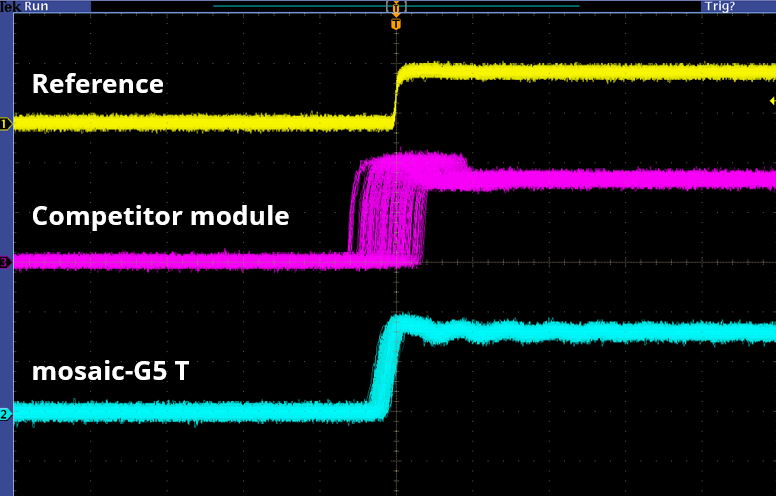
Because of hardware constraints, the physical time pulses generated by the receiver often have a resolution which is coarser than then ideal accuracy achievable by a receiver, so the PPS accuracy is ultimately limited by this time resolution. mosaic-G5 T features a PPS resolution of just 1.4ns, ensuring that the full timing accuracy is available at the PPS output. In the image below a competition receiver (pink) with a coarse hardware resolution is showing jitter on its PPS output, which means a reduced pulse accuracy for the end user. The mosaic-G5 T module (blue) has a finer hardware resolution resulting a higher PPS precision.
Over the years Septentrio’s GNSS timing module technology has proven to be a benchmark in precision and resilience, delivering secure, interference-resistant synchronization that keeps critical infrastructure worldwide operating reliably and in perfect time.
Find out more about Septentrio’s solutions for timing and synchronization.
Reference
1. https://metro.co.uk/2012/02/21/gps-jammers-could-make-criminals-millions-on-the-stock-market-327410
FAQ
Septentrio receivers track all visible satellites from all available GNSS constellations (GPS, Galileo, BeiDou, GLONASS, etc.), leveraging the atomic clocks onboard those satellites; by combining signals from multiple constellations and using multi-frequency measurements, the receiver outputs reliable timing with sub-nanosecond accuracy — without the high cost of physically deploying atomic clocks.
Septentrio’s timing modules (e.g. mosaic-T and mosaic-G5 T) incorporate its proprietary AIM+ technology — providing real-time anti-jamming and anti-spoofing protection via advanced interference detection and mitigation. This ensures secure, continuous timing even in RF-challenged or hostile environments (e.g. near broadcast equipment, radio antennas, or in presence of malicious interference).
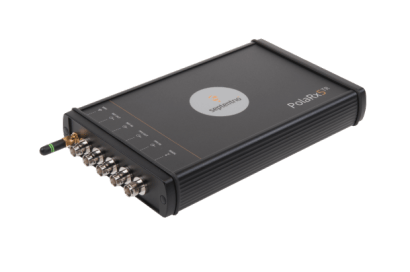
For time transfer and metrology, Septentrio offers the PolaRx5TR, optimized for high-quality code and carrier-phase measurements, PPS-IN internal delay auto-calibration, and CGGTTS V2E compliance — making it suitable for lab-grade synchronization, time servers, and reference-time networks.
For size, weight and power constrained designs, Septentrio’s ultra-compact mosaic-G5 T module is ideal — combining nanosecond precision, multi-constellation multi-frequency tracking, and AIM+ anti-jamming/anti-spoofing protection in a very small package, making it a strong choice for large-scale time-synchronization deployments.
Septentrio timing receivers use multi-frequency, multi-constellation measurements combined with advanced internal filtering and error-compensation algorithms to deliver a highly stable, low-jitter PPS signal. By correcting atmospheric and satellite-related timing errors in real time, the receiver maintains nanosecond-level precision, ensuring reliable synchronization for telecom, data-center, financial, and other timing-critical systems.